Don’t forget about your outdoor plants when you head out for vacation this summer They’ll need to be watered while you’re gone, or you could come home to a not-so-healthy garden.

water outdoor plants

If you can’t rely on a neighbor to give your plants a drink, and you don’t want to just hope for rain, try the following practical ideas for keeping your garden watered while you’re away on vacation.

Thoroughly Water and Mulch Outdoor Plants

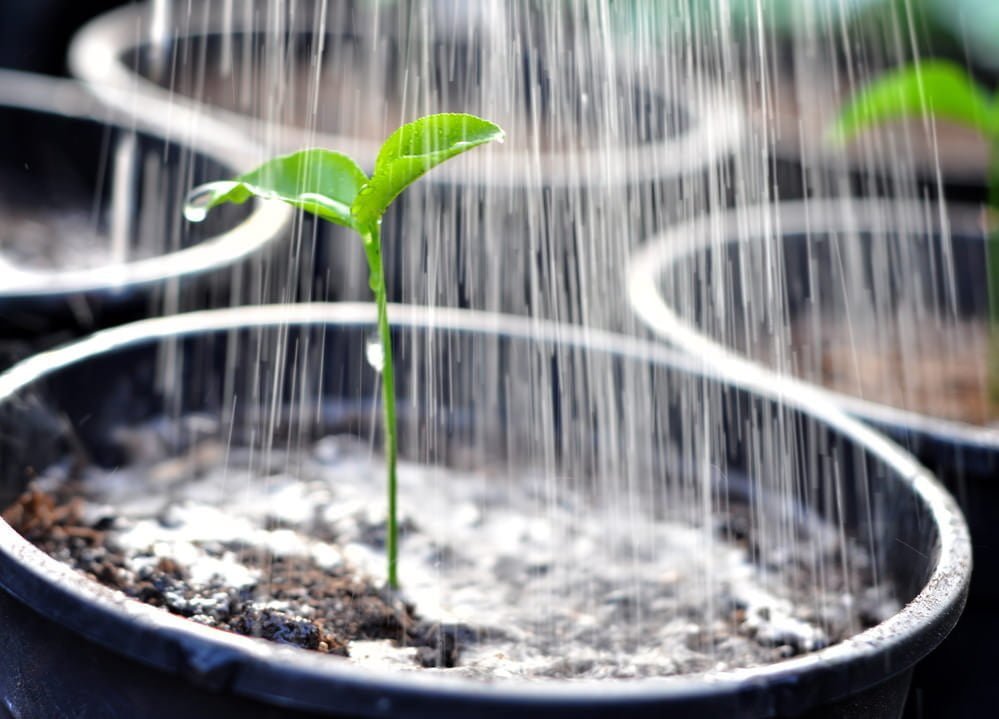
If you’re only going to be gone for a few days, your plants may be just fine if you give them a good soak right before you leave.

Mulch is crucial for this to work, as mulched plants lose much less moisture than those that are left unprotected. Make sure your garden bed has two to three inches of coverage. Don’t be tempted to add more, though, as too much mulch can block oxygen to the plant roots.

After you water, use a shovel or long screwdriver to poke through the soil under the mulch. Is the soil wet a few inches below the surface? If so, your outdoor plants should survive your short vacation.

Use a Rain Barrel and Soaker Hoses to Water Outdoor Plants

For longer trips, watering and mulching may not be enough to keep your plants healthy. A rain barrel can provide a continual supply of water.

Attach a soaker hose to a rain barrel and snake the tubing through your garden. The stored water will slowly run out through the hose and saturate the ground. You still need to water well before you leave, but this method can keep your outdoor plants adequately doused while you enjoy a lengthier vacation.

If it hasn’t rained enough to fill your water barrel, you can fill it up from the tap – that kind of cheat is just fine at a time like this.

Keep Outdoor Plants Watered with Plastic Bottles

If you don’t have a rain barrel, you can create your own self-watering system with recycled plastic bottles.

Remove the caps from a few empty soda bottles and use a nail to poke a tiny hole in each. Or, simply replace the caps with funnel-shaped spikes, available at your local garden center.

Water your plants well, then fill the plastic bottles. Screw on the caps or irrigation spikes, and push the bottles upside-down into the soil next to your plants.

You may need several bottles to water your entire garden, but this system is an easy way to make sure your plants get enough to drink. The slowly dripping water will keep the soil moist until the containers empty.

If your vacation is going to last more than a couple of weeks, you can try using 2-liter bottles. Just be careful to make sure they are stable and won’t tip over.

For more advice on keeping your garden healthy, drop by Millcreek Gardens, Salt Lake City’s favorite garden center since 1955. Our friendly, experienced staff understands the growing conditions of northern Utah, and we can answer all of your questions about growing healthy outdoor plants.

Outdoor plants that bloom at night can create a beautiful, fragrant backdrop for fragrant summer nights spent under the stars.

Several varieties of gorgeous, night-blooming flowers are well-suited to the climate and growing conditions here in northern Utah. Plant one or more of these beauties and you’ll have a magical, moonlight garden in your back yard.

night blooming outdoor plants

No. 1: Yellow Evening Primrose

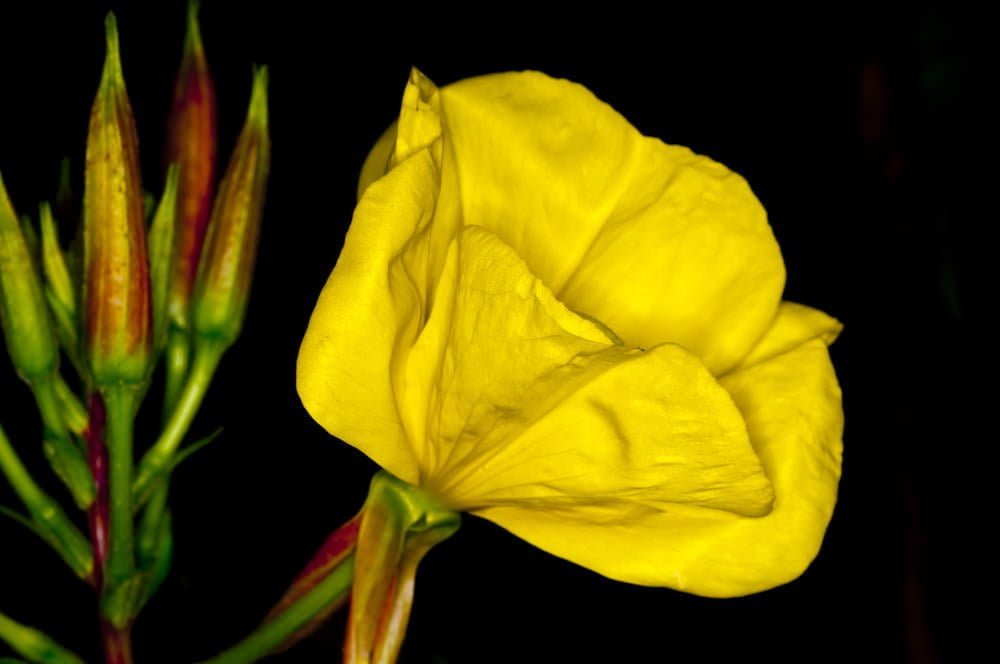
Yellow evening primrose, or Oenothera flava, has brilliant cup-shaped flowers that resemble dandelions. The lemon-scented blooms open in the evening and close by noon the next day.

Growing these stunning night-bloomers is extremely easy, as these outdoor plants can tolerate dry, rocky soil as well as full sun, partial shade or full shade. Primrose can reach three to five feet in height, so they can provide a striking focal point for a moonlight garden.

No. 2: Night Phlox

night-phloxSeveral varieties of night phlox, or Zaluzianskya, feature bursts of stalks with small flowers that open at dusk. These night-bloomers are available in shades of white, purple and dark red, and their honey-almond vanilla scent pairs well with other aromatic moonlight garden flowers.
Well-drained soil is a must for these low-growing outdoor plants, and they need full sun during the day to thrive.

No. 3: Night-Scented Stock

Matthiola longipetala, or the night-scented stock, has small, delicate flowers in shades of white, pale lilac and light blue. When these low-growing plants open in the evening, they release a delightfully spicy vanilla fragrance.

Night-scented stock is easy to grow in most types of soil, but it does need full sun. In addition, these outdoor plants need to be watered regularly during dry periods.

No. 4: Four O’Clock Flower

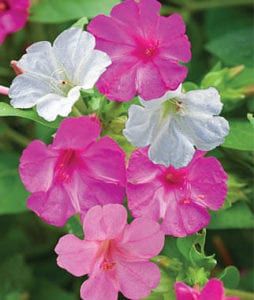
four-o-clocksThe four o’clock flower, or Mirabilis jalapa, is so-named because the multicolored blooms begin to open in late afternoon or early evening. These outdoor plants grow to about three feet, and are available in a wide range of shades, including pink, yellow, white, red and magenta.
These highly fragrant flowers attract butterflies, hummingbirds and bees. Full sun is preferred, but they can tolerate partial shade.

No. 5: Night Gladiolus

Gladiolus tristis, or the night gladiolus, is a pale yellow or striped dark yellow and green flower that opens in the evening, exuding a spicy scent. These beauties grow three to four feet tall, with blooms first appearing in the late spring or early summer months.

Night gladiolus requires full sun and regular watering. And, as parts of these garden plants are poisonous, they may not be suitable for homes with pets or small children.

No. 6: Moonflower

As the name suggests, the moonflower, or Ipomoea alba, blooms in the moonlight. These vine plants produce large, white trumpet-shaped flowers and a slight lemon scent, providing an enchanting background for neighboring night-blooming outdoor plants.

Moonflower is easy to grow, but it does need full sun and well-drained soil. Like the night gladiolus, parts of the moonflower are toxic and may be dangerous for pets and small children.

The experienced staff at Millcreek Gardens, Salt Lake City’s favorite garden center since 1955, can offer tips on creating a magical moonlight garden in your backyard. To learn more or to explore our night-blooming outdoor plants, stop in and see us today.

White perennial flowers have a brightening effect gardens and flowerbeds, enhancing you other plants during the day and virtually glowing in the early evening twilight.

Several gorgeous varieties of white flowers are available at your local garden center, all of which can beautify your outdoor spaces. Here are five Millcreek Gardens staff favorites.

white perennial flowers

No. 1: Snowdrop

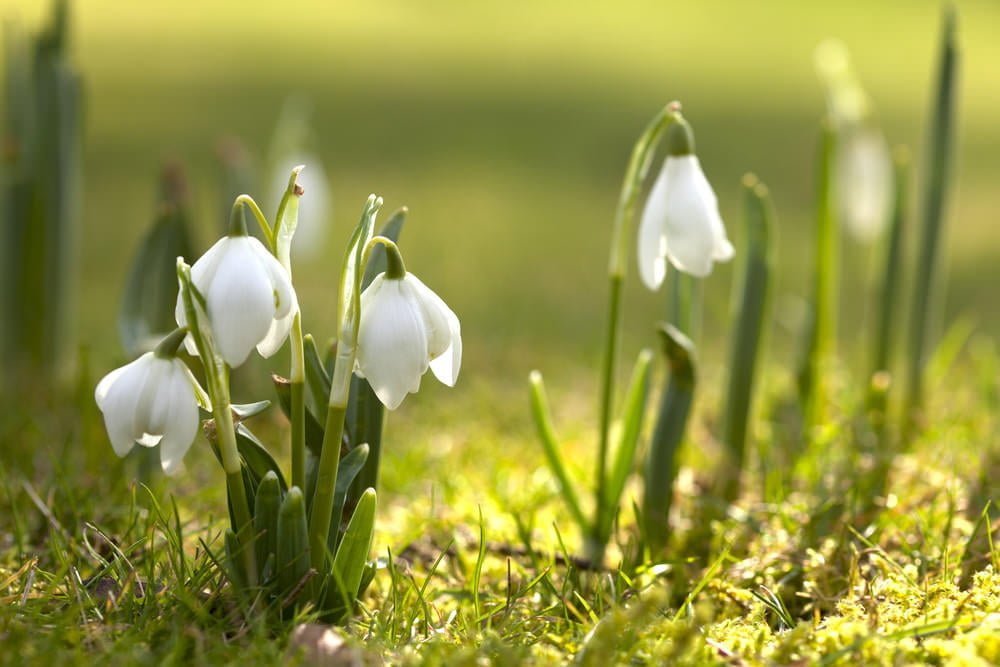
Galanthus nivalis, more commonly known as the snowdrop, is a spring-blooming bulbous perennial that is known to poke its head up through an early spring blanket of snow. The name, however, refers to the way these white flowers resemble drops of snow.

Snowdrop is easy to grow, and it can flourish in full sun or partially shaded areas of your garden. These stunning white flowers also do particularly well under deciduous trees.

No. 2: Evergreen Candytuft

Evergreen candytuft, or Iberis sempervirens, is another striking spring bloomer. This groundcover plant features glossy evergreen foliage with loads of multi-petaled white flowers that last for several weeks.

Once established, evergreen candytuft is drought-tolerant, and it can grow well in either full sun or partial shade. These white perennial flowers prefer drier, well-drained soil. If your garden has heavy clay soil that stays wet during winter, mix in some soil amendments to improve drainage before planting these perennial flowers.

No. 3: Sweet Alyssum

Sweet alyssum, or Lobularia maritima, is a fragrant, low-growing perennial flower that features dozens of tiny white blooms bursting from each stem. The blooms can last for months – even during the winter in milder climates – making them a perfect choice for northern Utah gardens.

Full sun is best for sweet alyssum, but they can tolerate partial shade. As these beauties can spread, they make for excellent groundcover plants.

No. 4: Tufted Evening Primrose

Oenothera caespitosa, or the tufted evening primrose, has spectacular large white blooms surrounded by long toothed (or tufted) leaves. These perennial flowers open once the sun starts to set, attracting nighttime pollinators.

The tufted evening primrose is native to Utah, so these perennial flowers can certainly thrive in your garden. This plant is highly tolerant of drought, but it needs full sun to thrive.

No. 5: Garden Phlox

Phlox paniculata, or the David garden phlox, is a sweetly-perfumed perennial flower that maintains a full display of large, brilliant white blossoms from late summer through early fall. Thinning the shoots in the spring can encourage these perennials to develop larger and longer-lasting flower heads.

Another native Utah plant, this phlox variety grows best in full sun and moist, well-drained soil. During dry spells, these perennial flowers require regular deep watering.

The friendly staff at Millcreek Gardens can recommend a wide range of beautiful flowers, shrubs and landscaping trees that are ideally suited for the Utah growing conditions. To explore our options for white perennial flowers or other outdoor plants, visit our beautiful Salt Lake City garden center today.

Choosing outdoor plants for a sloped yard can be a challenge. Drainage is uneven and erosion of the topsoil occurs after every heavy rainfall. Weeds always seem to grow well, but getting desirable plants to take root can be an “uphill” battle.

best outdoor plants

To overcome this challenge, fill your sloped, hilly or terraced yard with a mixture of plants chosen to diffuse the impact of rainwater drainage. Several beautiful varieties of shrubs, groundcover and flowering plants can thrive on Utah hillsides.

Slope-Friendly Shrubs to Help Control Yard Erosion

Garden shrubs come in a wide range of shapes and sizes. Planting a mixture of low-growing and taller outdoor plant varieties will add visual interest and help control topsoil erosion.

To handle the difficult growing conditions of a sloped yard, outdoor plants need a vigorous, soil-holding root systems that can diffuse heavy rains.

The curl-leaf mountain mahogany, a densely-branched, slow-growing evergreen shrub, is a good choice for a sloped lot. The flowering alder-leaved service berry, the upright-spreading red twig dogwood and several species of dwarf forsythia are other slope-friendly shrubs that will do well in most areas of northern Utah.

Outdoor Plants for Groundcover in a Sloped Yard

Instead of wrestling with the mower, why not get replace the grass with groundcover? As these plants grow, they’ll spread to cover the area, filling in around your garden shrubs.

For a sunny, south-facing slope, you can plant Mediterranean herbs, miniature wormwood or gold sedum. If your yard is shady or only gets direct sun for part of the day, consider low-growing hostas, ferns, ornamental grasses or native prairie plants.

Flowering Outdoor Plants Add Color to a Sloped Yard

Would you prefer to turn your hillside into a gorgeous sea of color? Wildflowers are an ideal solution. Native wildflowers can dress up your slope, and they’re easy to maintain.

Start with top-quality seeds, as they’ll contain fewer weed seeds. For these flowering plants to establish well, you’ll need to be diligent about weeding for the first year or two. After that, the wildflowers will naturalize and create a self-sowing landscape that appears to be designed by Mother Nature.

If you prefer a more formal or intentional design, you can plant clusters of perennials. Mountain pinks, candytuft and dwarf iris are just a few of the varieties of flowering outdoor plants with strong enough root systems to handle the conditions of an incline.

The friendly staff at Millcreek Gardens can offer more tips on landscaping your sloped yard. Visit us in Salt Lake City, Utah, today for help in choosing the right outdoor plants for your hillside.

When you choose a local plant nursery for flowers, trees and shrubs, you come away with much more than just plants.

Sure, you could head to one of the big box stores or buy your plants and gardening supplies online. But choosing to shop at your local garden center adds value that those alternatives don’t offer.

local plant nursery

No. 1: Your Local Plant Nursery Offers Great Advice

Not everyone has a green thumb. In fact, many gardeners need a little help to keep their outdoor plants healthy.

If you have questions about your garden, who better to answer them than the staff at your local nursery? The employees grow plants for a living, and their hands-on, year-round experience means they can offer gardening tips and suggestions that are proven to work in this area.

At the big box and online retailers, getting your questions answered isn’t so easy. General growing information may be available, but you probably won’t have the same access to personal, expert advice – if you can even find an associate to talk to.

No. 2: Your Local Plant Nursery “Gets” Northern Utah

Growing conditions vary widely across the country and even throughout our state. Trees, flowers and shrubs that flourish in some areas may not do so well in others.

Your local nursery understands the specific soil, climate and pest challenges that exist in our area of northern Utah. Consequently, the staff can recommend outdoor plants that can survive and thrive under our unique – and often challenging – conditions.

You can research planting zones and general information online, but nothing can compare to the voices of experience that greet you at your local garden center.

No. 3 Local Nurseries Sell High-Quality Plants

Big box retailers and online stores may have lower prices for their indoor and outdoor plants, as they buy in bulk. But this means their selection is limited to the most popular varieties. Unusual or native species can often only be found at your neighborhood plant nursery.

In addition, big box and online retailers purchase their flowers, trees and shrubs from wholesale growers located throughout the country. The plants are grown in greenhouses, who knows where, so they are not adapted to any particular or soils climate conditions.

Neighborhood garden centers, on the other hand, grow their own outdoor plants or buy them from local growers. In either case, the plants are well adapted to our northern Utah climate and growing conditions, so you can trust that they will thrive as a part of your garden or landscape.

For personalized advice and expert answers to all of your gardening questions, Millcreek Gardens is the local favorite. Visit us in Salt Lake City today, and you’ll appreciate the difference a local plant nursery can make in your gardening success.

Moving landscaping trees from their original comfort zone to a new location causes a great deal of stress on the plants. Transplant shock is common, and trees can lose up to 90 percent of their root systems. Root loss can lead to an increased vulnerability to drought, disease, insects and other growth problems.

landscaping trees Utah

Fortunately, with proper care, you can head off these issues and maintain the health of your newly-planted trees.

Watering Tips for New Landscaping Trees

Water is crucial for recently transplanted trees. Until the roots have a chance to extend deeply into the existing soil, regular watering of the root ball at the trunk is imperative – and an automated lawn sprinkler system won’t suffice.

For the first two to three years after planting, trees require consistent soil moisture. The amount of rainfall in your area and the nature of your soil dictate how often you need to water.

You will know it’s time to water when the root ball is dry. Check this by digging gently or by using a soil probe.

Mulching Newly-Planted Landscaping Trees

Mulching can also help your new landscaping or shade trees make the transition from the nursery to your landscape. Mulch helps regulate soil temperature, retain soil moisture and keeps weeds from growing. And, as mulch breaks down, it acts as a slow-release fertilizer, providing a growing medium for the trees.

After planting a new tree, apply a three- to four-inch layer of organic mulch from the base to past the drip line, or the end of the branches.

Take care to keep the mulch several inches away from the trunk, however. Placing mulch too close to the trunk holds in too much moisture and heat, which makes an ideal breeding ground for pests and diseases.

Caring for Young Landscaping Trees as they Grow

Many young trees are fragile, but staking can help prevent leaning and uprooting until the roots have stabilized in the soil. Be careful not to stake too tightly – a bit of flexibility lets the flare at the base of your new landscaping trees develop naturally. In most cases, stakes can be removed after the first full growing season.

Pruning your new landscaping trees should be limited to removing only the dead, diseased or broken branches. Wait at least a year before pruning larger branches or attempting to shape the tree limbs, or you may inhibit critical growth.

Be sure to inspect your newly-planted trees regularly for insect damage. As new leaves grow, check both sides for signs of pests. Young trees need all of their foliage to generate food, so be sure to address any problems promptly.

What about fertilizer? With most tree varieties, it’s better to hold off for two to three years, as fertilizing isn’t that effective until the root systems have become well established in the soil.

Millcreek Gardens, Salt Lake City’s favorite garden center since 1955, offers a wide selection of outdoor plants perfectly suited to our Northern Utah soil and climate conditions. Visit us today for all of your indoor and outdoor plant and shrub needs. Our friendly staff is happy to provide all the advice you need to grow beautiful, healthy landscaping trees.

Growing plants beneath shade trees is one of gardening’s biggest challenges.

Transforming patches of hard earth and knobby roots into lush, beautiful gardens or landscaping isn’t easy. Without proper planning and care, the plants may not flourish and you could end up damaging your trees.

planting under trees

Follow a few basic gardening rules, though, and you can create vibrant, shady gardens that ensure both your trees and your new plants thrive.

Meet the Needs of Your Shade Trees First

Although you might think that tree roots are buried deep underground, the reverse is true. Most tree species have root systems that remain close to the surface. When planting your shady garden, it’s important to avoid disturbing or damaging the roots. Otherwise you might kill the tree.

Some tree varieties are especially sensitive to soil disturbance, and it can be difficult to plant your shade-loving plants among a tangle of shallow roots. Adding an additional layer of soil is not a good idea because it will reduce the amount of moisture and oxygen that reaches the roots. As a result, your shade trees could suffer.

Instead, carefully dig separate holes among the roots, one for each plant. Once you finish planting, add a thin layer of mulch – no more than two or three inches – to protect the tree and plants.

Choose the Right Plants to Grow Under Your Shade Trees

When you come in to select your plants, think small. That way, the holes you have to dig can be smaller. It will also be easier to tuck smaller plants among the tree’s roots.

Thick shade tree canopies block sunlight and deflect rainfall, and not too many plants can cope with these conditions. Consequently, it’s important to choose plants that are tough enough to thrive in full shade and dry soil.

Some the hardiest choices for this environment are hostas, ferns, impatiens, asters and primrose flowers.

Tips to Help Plants Thrive Under Shade Trees

Your flowers and garden plants will have to compete with your trees for water. This means you may need to water them a little every week, particularly when rainfall is scarce. And, if it appears your trees are stealing all the moisture, you can spot-water your new plants.

Skip fertilizing for the first year after planting your under-tree gardens. Fertilizer encourages top growth, not the root growth your new flowers and plants need.

Each spring, replenish the soil by laying down organic matter such as compost, manure or shredded leaves. Doing so naturally enriches the soil and helps your new plants become established. It also helps retain critical moisture in the soil.

At Millcreek Gardens, northern Utah’s favorite garden center, our friendly associates can offer advice on a variety of gardening challenges. Visit our Salt Lake City nursery today to learn more about successfully growing flowers and plants under shade trees.

A prehistoric dinosaur garden, with exotic and primordial plants, is a fun and engaging project for the whole family.

dinosaur garden

Dinosaurs haven’t roamed the earth for at least 65 million years, and they aren’t likely to make a comeback any time soon. But many of the plants these reptiles ate and stomped on are still around, and they haven’t changed much over time.

Recreating this prehistoric environment in your garden will provide hours of fun and imaginative play opportunities for the young dinosaur enthusiasts in your family.

Designing Your Prehistoric Dinosaur Garden

Prehistoric garden designs use primitive plants that existed during the era of the dinosaurs. Several different varieties of landscaping trees and ground plants fit in well with this gardening theme and are well-suited for growing in Northern Utah.

For your kid-friendly primordial garden, go easy on the flowers. Most flowering plants didn’t begin to develop and spread until the end of the dinosaur era. You can include edible plants, however, because the prehistoric crowd was a hungry bunch and no one wants a hungry dinosaur roaming the back yard!

Your dinosaur garden can be as large or as small as you like. Some families create miniature versions, similar to fairy gardens. But, if you have the room to spare, you can dedicate a larger portion of the yard and create a dino garden that your family can enjoy year after year.

Choosing Trees for Your Prehistoric Dinosaur Garden

Ginkgo biloba, also known as maidenhair tree, is a perfect choice for a prehistoric garden. The ginkgo is referred to as a living fossil, as it dates back 270 million years. These striking trees have unique fan-shaped leaves and can grow to heights of 25 to 50 feet.

Metasequoia, or the dawn redwood, is another tree that was familiar to the dinosaurs. Scientists believed it to be extinct until a living specimen was discovered in 1944, growing in a rural area of China. Dawn redwoods are fast-growing, pyramid-shaped trees that can reach up to 100 feet tall. Their broad, fluted trunks give the trees a unique, primordial appearance.

Other interesting tree options for your dinosaur garden include bald cypress and other types of redwoods and sequoias. Weeping cedar and larch trees can also work in this garden theme.

If your project isn’t large enough to accommodate full-size trees, consider using miniature versions in a raised bed or container.

Primitive Plants for Your Kid-Friendly Dinosaur Garden

Cycas revoluta, or the cycad, evolved right along with the dinosaurs. These garden plants resemble today’s palm trees, but are much shorter, about the size of a shrub. Growing cycads in the colder parts of Utah can be challenging but they can do well with some winter garden protection. Be careful if you have younger children, however, as the seeds can be poisonous if ingested.

For low-growing plants to fill out the rest of your dinosaur garden, look to the familiar fern. These primitive plants date back more than 300 million years, and come in many interesting varieties. Most grow well in partial or full shade, making them a perfect choice for planting under your trees.

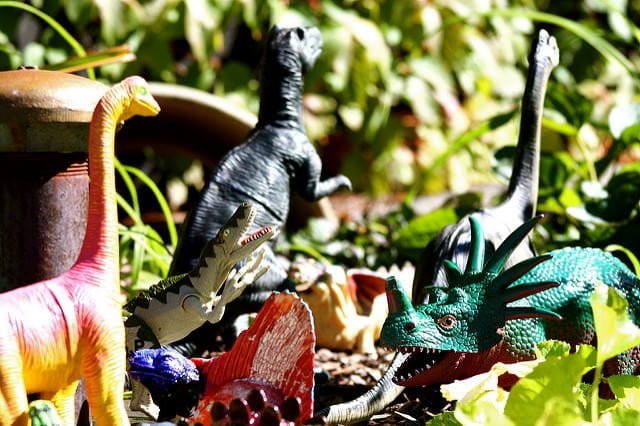
Horsetail herbs, gunnera plants and juniper shrubs are other low-growing options for a prehistoric garden. Fill in the rest of the spaces with mosses, rock mounds and path and – of course – some toy dinosaurs. You can also add some areas dedicated to play, with sand, “petrified” wood or boulders for sitting.

Then sit back and watch the little ones have fun in your very own Jurassic Park!

The friendly experienced staff at Millcreek Gardens can help you choose the perfect trees, shrubs, plants and accessories for all of your gardening and landscaping needs. Stop by our Salt Lake City garden center today to browse our extensive selection and gather inspiration for your kid-friendly dinosaur garden.

Many Utah gardeners believe that growing cactus plants outdoors is impossible, or that cacti only do well in the states of the Desert Southwest. Fortunately, this is not the case.

cactus planting Utah

While cacti do thrive on light and heat, many varieties can thrive just as well in cold-winter climates. In fact, cacti can thrive as far north as some portions of Canada! So, if you would like to add some of these perennial beauties to your garden, it’s simply a matter of choosing the right cactus plants.

Step No. 1: Choose Cold-Hardy Cactus Plants for Utah Gardens

Not every variety of cactus is well-suited for growing outdoors in Utah, but surprisingly many are. Before choosing your plants, check their hardiness rating, which indicates their ability to tolerate cold conditions. Most of the Salt Lake City area falls into Zone 5, although some portions can range into Zone 4 or 6 depending on elevation.

Many of the cacti in the Opuntia or prickly pear family are known to be cold-hardy, and they come in a wide range of shapes and sizes. Most have paddlelike pads and red, pink or yellow flowers.

Opuntia fragilis, or brittle prickly pear, is the toughest in the family, able to withstand temperatures as low as -35 degrees. Opuntia polyacantha, or plains prickly pear, is a close second, as it is cold-hardy to -25 degrees.

Several cacti in the Cylindropuntia (cholla) family also grow well outdoors. Buckhorn, silver and whipple cholla are large, shrub-like spiny plants that are able to withstand cold winter weather.

Other varieties that can survive Northern Utah’s cold temperatures include Echinocereus engelmannii or coccineus, both commonly known as types of hedgehog cactus. Escobaria vivipara, known as the beehive cactus, is also cold-hardy enough to grow in your yard or garden.

Step No. 2: Learn the Optimal Conditions for Growing Cactus Outside

Cactus plants grown outdoors here in Utah have the same basic needs as cacti grown elsewhere.

First and foremost, cacti require sunlight to bloom, so you’ll need to plant them in a spot where they’ll get plenty of sun.

Good drainage is also a must for growing your cactus plants outside. Rather than using basic garden soil or sand, create a nutrient-rich, fast-draining soil mixture by adding 40 to 60 percent coarse sand or pea gravel and up to 10 percent compost to your regular planting mix.

To boost drainage, consider planting cacti in raised garden beds. Or, for even better moisture control, choose containers instead. With container gardens, you’ll be able to move the cacti out of the wet weather if necessary, saving them from overwatering.

Step No 3: Learn How to Care for Your Cactus Plants

Cacti do need a drink of water now and then but, whenever you can, let Mother Nature handle the watering. If several weeks pass without rain and your plants begin to droop, you can help nature along by giving them a little water.

Avoid watering your outdoor cacti during the late fall and winter, however, because excess water can freeze and kill your plants.

Fertilizer isn’t necessary for most cactus plants. If you do opt to fertilize, avoid any products with a large nitrogen component. Nitrogen will help your cacti grow but it leaves them vulnerable to winter damage.

Cold-hardy cacti can survive our Utah snowstorms and, in fact, snow accumulation provides a layer of protection. If the weather forecast calls for harsh winds or icy conditions, you can cover your cacti to prevent any structural damage.

The expert staff at Millcreek Gardens can provide a wealth of information to help you select the right plants for your garden and landscape. For more advice on growing cactus plants, visit our Salt Lake City garden center today.

When you attract butterflies to your garden, you bring wonder and beauty to your outdoor environment. And, thanks to their mad pollinating skills, these fascinating insects are highly beneficial to your garden.

Fortunately, it’s easy to attract butterflies to your yard. All you need is the right combination of outdoor flowers, plants and shrubs, and you’ll play host to these delightful visitors all summer long.

butterfly garden

Choose Garden Plants that Attract Butterflies

To attract butterflies to your garden, you’ll need nectar plants, which provide a reliable food source. But, if you really want to attract large butterfly populations, you also need host plants where they can lay their eggs.

Native Utah flowering plants are the best choice for your butterfly garden. Local insects have evolved to depend on the plants that are common to our geographic area. Some species of butterflies are migratory, and may visit while they’re passing through. Rest assured that even the out-of-towners will enjoy our native flora.

When choosing your butterfly garden plants, choose flowers in a range of vibrant colors. Short, flat-topped or clustered blossoms in red, yellow, orange, pink and purple are most attractive to adult butterflies.

To encourage butterflies to make a home on your property, choose outdoor plants that continuously bloom. You can also choose different varieties of seasonal flowering shrubs, so that you’ll have plenty of blossoms in the spring, summer and fall

Finally, since butterflies prefer to feed in the sunlight, plant nectar plants in those areas of the yard that receive full sun from mid-morning to mid-afternoon.

Add Landscaping Elements for Your Butterfly Garden

After you select the right mix of nectar and host plants, don’t forget the rest of the landscaping elements that will attract butterflies to your garden.

Butterflies like shelter from the wind, so make sure your yard has plenty of shrubs and landscaping trees. They also enjoy basking in the sun, so arrange several smooth, flat stones among your flowering plants.

For a truly butterfly-friendly environment, you also need water puddles. Many winged insects partake in puddling, which allows them to get a drink and absorb minerals. If rainfall is sparse and your landscape has no puddles, place a few shallow containers of sandy water in sunny areas of your backyard.

A Word of Caution about Butterfly Bushes

You may have heard or read about butterfly bushes. Because they are loaded with attractive blooms, these shrubs are often recommended for use in butterfly gardens.

Unfortunately, we need to be cautious with these aggressive, non-native shrubs in Northern Utah. Without constant care – deadheading every bloom and never letting them go to seed — butterfly bushes can take over your yard and garden and spread to neighboring properties. If they take hold in the wild, they can become invasive and uncontrollable, choking out native plant species and disrupting the delicate ecosystem.

The best –and safest – way to attract butterflies to your garden is to choose native flowering plants. They will thrive with much less water and require less care.

Millcreek Gardens offers a wide variety of native landscape and garden plants, annual flowers, shade trees and more. For more advice on how to attract butterflies to your garden, visit our Salt Lake City garden center today.