The internet is a great source for gardening tips of all kinds, but it isn’t always convenient to access on your computer. 

Many websites – including Millcreek Gardensprovide a dependable and helpful source of gardening tips and advice. But if you’d like the convenience of having the information right at your fingertips, consider one of the latest smartphone apps. 

gardening-tips

Both the iTunes Store and the Google Play Store have apps that can be useful for novice and experienced gardeners. Here are some of the latest and greatest options. 

Gardening Tips Apps for Choosing the Perfect Plants and Flowers 

Do you enjoy looking at images of fabulous gardens for inspirational ideas? 

Several apps offer gorgeous photos and videos along with handy gardening tips to help you achieve a similar look. And, if you come across a real-life tree, shrub or plant you love but can’t identify, apps like Leafsnap can help you make an identification. 

But, while you may love how certain flowers look, they may not grow well here in northern Utah. And, some varieties do not make good neighbors. An app like Perennial Match can help you choose plants that work with our sunlight and growing zone, to make sure that your selections can thrive side by side. 

Smartphone Apps with Planting and Maintenance Gardening Tips 

When is the ideal time to plant your Utah garden? Try an app like Garden Plan Pro or When to Plant, which use weather station data to give you personalized information and gardening tips for the varieties you intend to plant. 

Mary, Mary, quite contrary, how, exactly, does your garden grow? 

Do you have a set schedule for watering and fertilizing, or do you wing it and care for your plants when you get a chance? For many busy gardeners, a smartphone gardening journal app that tracks planting, watering and fertilization can be a valuable organizational tool that helps maintain garden health. 

Or perhaps you’re having an issue with your garden? Whether you have white spots on your leaves or mildew on your veggies, an app may be able to give you a diagnosis and recommended treatment. 

Apps with Gardening Tips to Plan Your Garden Design 

Would you like to see how your home would look with a professional garden design? 

Apps like Pro Landscape Home and iScape let you use photos of your home to create a digital model of your dream garden. You can easily add and move plants, shrubs, shade trees and design elements like paving and decking, to come up with an eye-catching design. 

Really, though, there’s no substitute for personalized professional help and advice. The friendly, experienced staff at Millcreek Gardens can help you choose plant varieties that will flourish in your Utah garden. And, we have the experience to offer specific solutions for any design dilemma or plant problem. 

Are you ready to start planning your perfect garden landscape? Visit the Millcreek Gardens website or stop by our Salt Lake City garden center today. We look forward to helping you with even more expert gardening tips.


Cold weather is coming and your container plants are anxious to seek warmth inside, with you and your family.

container-plants

Gardeners throughout northern Utah perform this ritual every fall, bringing their container plants inside so they can continue to thrive through the winter.

When to bring yours indoors — and how to prepare them for the transition — depends upon their variety. But, to give you a head start, we’ve put together a handy how-to guide.

When to Bring Container Plants Inside

Many of northern Utah’s most popular container plants really don’t appreciate cold air and wind. These typical winter weather conditions can damage the plants’ leaves and cause flower buds to drop.

Mulching or covering plants can provide some degree of protection but, eventually, they need to come inside or they will likely die.

As a general rule of thumb, you should start the process of bringing your plants inside once the nighttime temperatures dip below 50 to 55 degrees. With many varieties, you’ll need to acclimatize the plant first, so it doesn’t experience shock, wilting or leaf loss from the environmental change.

To acclimatize your plants, keep them indoors only at night. Then, over the course of a week or two, gradually increase the amount of inside time until they no longer go outside at all.

Check for Pests Before Bringing Container Plants Inside

Before moving your container plants indoors, be sure to check for any pests that may have established a home during the summer months. You may have both leaf-dwelling or soil-dwelling bugs – or both – and you don’t want those little critters coming inside with your plants.

Common leaf-dwelling pests include aphids, mealybugs, spider mites, gnats and spiders. Remove these by gently hosing down the plant leaves or submerging the entire pot in a bucket of warm water for about 15 minutes.

Slugs, earwigs, and other soil-dwelling pests also like to infest potted plants. Try removing the plant from the pot and flicking them away or get rid of them with the pot-dunking procedure described above.

Make Sure Your Container Plants Aren’t Pot-Bound

Out in the abundant northern Utah summer sunshine, your plants have probably grown quite a lot since you first potted them. There’s a good chance they may have outgrown their containers, or become pot-bound.

Once the roots have become tightly packed in the soil, potted plants begin to suffer. Potting soil’s nutrients also diminish over time so, if you haven’t been fertilizing and mulching adequately, your plants may need a little nutritional boost as well as room to move.

Symptoms of a pot-bound plant include dense root growth at the surface, frequent wilting and poor-quality flowers. Pot-bound plants may also have smaller new leaves and stunted growth, or a lack of flowers. If any of yours are pot-bound, you will need to re-pot them to ensure they grow well and remain healthy through the winter.

Winter, spring, summer and fall, the friendly and experienced staff at Millcreek Gardens has all the products, gardening supplies and plants you love at our convenient Salt Lake City nursery. Stop by and visit us this weekend and don’t hesitate to ask our helpful team all your questions about indoor gardening and container plants.

Divide Perennial Flowers

Perennial flowers bring beauty and life to your garden, year after year. But they do require a bit of maintenance each year.
 
Generally, fall-blooming perennials should be divided in the spring, and plants that flower in the spring or summer should be divided in the fall. Dividing perennials outside of their flowering seasons allows the plants to put all of their energy toward healthy root and leaf growth.
 
Why should you take the time to divide perennial flowers? And how do you go about doing it? Our outdoor plant experts offered these pro tips.
 
Why Should You Divide Your Perennial Flowers?
 
After a few years in the garden, your perennials may start to show performance issues, like smaller blooms and weaker stems. Dividing them can stimulate new growth and rejuvenate the plants for a return to more vigorous flowering.
 
Some varieties of perennial flowers spread rapidly through the garden. Division can help keep these plants under control, as it helps to limit their size.
 
Perennial division is also a cost-effective way to increase the number of flowering plants in your garden. After all, dividing perennials will give you two or three times the number of plants.
 
How Do You Divide Perennial Flowers?
 
Dividing perennials is really quite simple. First, you’ll need to gently dig them up from the ground. So, grab a sharp spade or a garden fork, and gently lift the plants out of the dirt. Remove the loose soil around the roots, along with any dead spots.
 
Now, carefully tease the root clumps apart into a few smaller sections, each with several strong shoots and a healthy amount of roots. You may be able to use your hands to pull the roots apart. With tougher, more fibrous-rooted perennials, however, you will likely need to use a knife or small garden spade. For really fleshy-rooted plants, you may need to use a hatchet or saw.
 
Replant one of your sections into the original location. Use the other perennial divisions elsewhere in your garden, or share them with family, friends or neighbors. If you won’t be planting them right away, wrap them in wet paper towels or newspaper, and place them loosely in a sealed plastic bag. Keep them in a cool location and try to get them back into the ground as soon as possible.
 
Tips for Dividing Perennial Flowers
 
To ensure that your perennial division goes well and your plants come out of it healthy and strong, do the work on a cool, overcast day. If you opt for a warm, sunny day, your plants could dry out and become damaged.
 
Gardening experts also suggest watering the soil the day before you plan to divide your perennials. Not only does this make your job easier, but the roots will be moist and less likely to go into shock. Make sure you plant the new divisions in prepared soil and spread mulch over and around them well to keep the roots insulated.
 
Do not fertilize the plants during your fall perennial division, as fertilizer will encourage new growth that will only die off with the first frost. But do continue watering weekly until the ground freezes.
 
If you would like to learn more about caring for your outdoor plants, stop by and talk with the friendly, professional staff at Millcreek Gardens in Salt Lake City. We are your local plant nursery and garden center, with all of the plants and supplies you need to keep your garden and landscape looking great all year long.

We look forward to seeing you soon, and helping you with all of your outdoor plants, perennial flowers and supplies.

Front Landscape Ideas

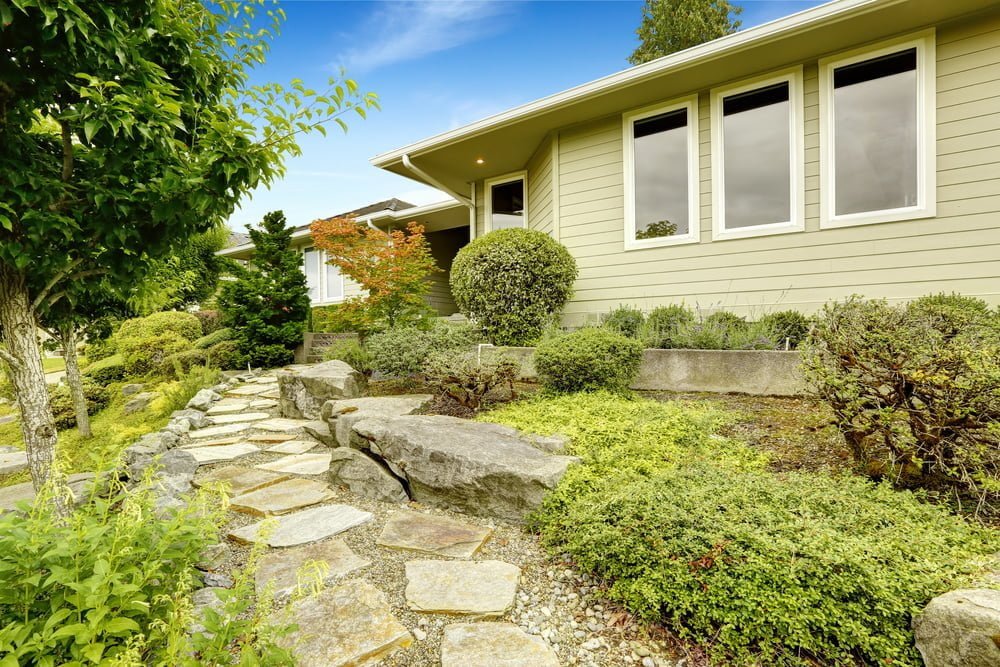
Some of today’s best landscape ideas and designs for the front yard are omitting the grass lawn.
 
Turfgrass offers its share of benefits; it’s beautiful and it helps lower the ambient temperature around your home. However, the disadvantages of grass outweigh the benefits for many homeowners today.
 
Why Grass-Free Front Landscape Ideas Make Sense
 
If you want to keep your lawn green and healthy, you have to invest sufficient time, effort and resources. Not only must you mow and edge regularly, but you must also fertilize, control weeds and pests, and water and water and water.
 
Water has become such a precious resource in Northern Utah that homeowners are opting to use more drought-tolerant types of landscape ideas and designs. When you eliminate grass from your yard, you can save hundreds of dollars in water costs every year while helping to preserve water.
 
You will also reduce your time in the yard significantly, and reduce or eliminate the need to use pollution-generating mowers and trimmers.
 
Besides, how much time do you actually spend in the front yard? Most families use the back yard for kids and pets to play, for barbecues and relaxing. You probably won’t even miss the grass out front.
 
Grassless Landscape Ideas Reinvent and Reinvigorate Your Home’s Look
 
If you tour newer neighborhoods, you may notice that most have minimized or eliminated turfgrass from their landscape designs. The result is a fresh, minimalist look that appeals to modern sensibilities. Today’s home buyers don’t want to spend all their free time and discretionary income maintaining their yard.
 
When you adopt a grass-free landscape design in your front yard, you give your home a modern curb appeal that feels clean and low-maintenance. But it certainly doesn’t have to be boring or colorless.
 
Front Yard Landscape Ideas You Can Adopt Today
 
Many homeowners hesitate to get rid of their grass based on the belief that landscape rock is the only alternative. Certainly most grass-free landscape ideas do use some landscape rock, but only in small quantities.
 
Instead, create a balance of hardscape elements – such as paths, concrete slabs and fountains – with a variety of native plants and groundcover. If you like the idea of creating islands within your landscape, you can create a perimeter and use rock in that sense. However, to maintain the ambient cooling you enjoy with turfgrass, plan to use more plant elements than hardscape and rock.
 
If you don’t want to use a professional designer, do an internet search for “xeriscape ideas” and “no grass landscaping ideas.” Or you can stop by Millcreek Gardens in Salt Lake City and let us assist you.
 
As Northern Utah’s premier locally owned garden center, we specialize in native plants, shrubs, trees and flowers, all grown for our unique climate and growth zone. Native plants provide a variety of benefits. Many are drought-tolerant and highly attractive to beneficial insects and local wildlife.
 
Stop by Millcreek Gardens today and let us help you ditch the grass in your front yard with our creative landscape ideas and suggestions.

Flowering Window Garden

The flowering window gardens of Venice and Provence provide the inspiration for this week’s DIY gardening project.
 
Going beyond the simple box designs you may know, window gardens take on a grander scale, trailing up and around the frame to create a dramatic vertical landscape that can be enjoyed from the inside as well as out.
 
You can design and create your own captivating window garden in a single afternoon, using our helpful tips and tricks.
 
Graceful and Inspirational Window Garden Designs
 
If you spend a moment browsing online images of European window gardens, you’ll notice that each one is as unique as its creator. And, in fact, no two are alike.
 
You can choose any type of containers and plants you prefer, but the most window garden impressive examples take their design cue from the architectural style of the home and the shape of the opening. For example, if your window is tall but narrow, chose plants and containers with a similar scale, such as mother-in-law’s tongue in a tall, thin metal can. You can also enhance tall openings by hanging plants from the top and along the sides. Or select vining plants that will grow up and around, creating a natural artistic design.
 
For a wider, shorter window, use short, rectangular containers similar to a traditional window garden box. Select plants that are generally shorter with a rounded profile. However, you can create visual interest by varying their height slightly.
 
Create Your Window Garden with These Tips
 
The Europeans say that, “Where’s there’s a window, there’s a way to garden.”
 
Begin your design by determining what sizes and shapes of containers will work best with your space. Before going in search of your window garden containers, however, take a moment to consider how you will attach them. Many European windows have a large exterior sill that lends itself to outdoor window gardening. In the United States, however, most of our window sills are inside.
 
If you prefer to create your garden outside, in the European tradition, you may have to anchor your containers to the exterior surface of your home. Metal horse trough-style planters are ideal for creating a secure window garden base, into which you can add your plants.
 
Hang overhead containers with swag hooks, using a screw attachment if you’re going into a wood surface or butterfly anchors for other surfaces. Be sure your hooks are rated to bear weight in excess of your hanging baskets.
 
Finally, give some thought to how you will water your window garden. Ensure your containers have plenty of drainage, but beware of surface staining from any runoff.
 
If Flowers Aren’t Your Thing, Try Window Farming
 
If you haven’t yet heard this term, you will again soon. Window farming is becoming an extremely popular was to grow fruits, herbs and vegetables in a small space.
 
As you might guess, window farming is just like window gardening, but with edible plants. Although the technique was originally conceived using empty plastic bottles with a hydroponic set-up, the concept has expanded to include a variety of containers and methods.
 
The beauty of a window farm is that it’s as beautiful as it is functional. Using the same principles as container gardening, you can group colorful lettuces, peppers and tomatoes. Intermix fruits and veggies with herb plants and enjoy a daily salad plucked right from your windowsill.
 
Millcreek Gardens, Salt Lake City’s locally owned and operated garden center, has everything you need to create the ideal garden and landscape design. Our expert staff can help you select the perfect containers, plants and accessories to create your own European-inspired window garden.

Landscaping Tips

Our expert garden center staff knows all the insider secrets for easy, successful landscapes and gardens. And – of course — they’re always eager to share!
 
As we ease into the beautiful Northern Utah autumn season, we thought this was the ideal time to share our five best no-fail gardening hacks with you.
 
No. 1: Healthier Rose Bushes in Four Simple Words
 
“Clear out the center.”
 
When the center of the rose bush becomes dense with foliage, the plant holds excess moisture. This moisture causes a myriad of problems including mold and black spots. When you prune out the center, the sun shines in, the moisture dries up and your rose bushes will thrive.
 
No. 2: Create a Memory Book of Garden Info
 
You know that one perennial flowering plant you put in two years ago, that you no longer remember what it’s even called, let alone where you bought it or how to care for it?
 
That will never happen again when you create a memory book for your garden.
 
Use a notebook, empty scrapbook or journal and, whenever you add plants, tape or glue their receipt, info and care tags into your memory book. You can also record when you last fertilized, or what type of bulbs you planted in the side yard last fall.
 
Place your memory book in a large. plastic zip-top baggie and store it with your garden tools. That way, it’s always handy – and dry — when you need it.
 
No. 3: Never Clean Garden Tools Again with These Hacks
 
This is a garden center favorite from years back.
 
If you’re tired of cleaning dirt and debris from your garden tools, start by spraying them non-stick cooking spray or bicycle chain lubricant. You can use this trick for loppers, shears, hoes, shovels and even bypass pruners. This will also help prevent rust.
 
Now, store your tools in pots filled with clean play sand. The abrasive action will clean off any remaining dirt and keep rust away all year long.
 
No. 4: Improve Your Spring Lawn with One Simple Autumn Hack
 
If you overseed your lawn’s turfgrass now, you’ll save time, money and hassle next spring.
 
By overseeding in the fall, when the temperatures turn cool, you’ll outsmart the weed growing cycle. By spring, your lawn will be healthy enough to fight off those pesky weeds by itself and to resist drought conditions.
 
Visit our garden center now to pick up the supplies you’ll need.
 
No. 5: Fertilize Now to Save Money and Time Later
 
When summer’s heat fades, your garden soil manages to hold onto its warmth for a few weeks. By fertilizing your garden beds in the fall, you can take advantage of this climate cycle to help encourage robust root growth for all of your garden plants and perennial flowers.
 
Come spring, your plants will be much stronger, requiring significantly less water and fertilizer next year. Stop in and ask one of our garden center experts to recommend a fertilizer that specifically encourages root growth.
 
Here at Millcreek Gardens, we love putting our knowledge and expertise to work for you. Our expansive Salt Lake City garden center has all of the tools, supplies, trees, shrubs and plants you need to create the perfect landscape all year long. Our friendly and knowledgeable staff is always on hand with the answers and expertise you need.
 
Come out and see us this weekend, so you can take full advantage of our pro tips and expert garden center advice.

Rain Garden

Today’s gardening tip is as decorative as it is practical, and it could save you some trouble the next time we have a heavy rain in Northern Utah.
 
Rain gardens are taking the gardening and landscape industries by storm, and for good reason. Not only do they provide a myriad of benefits for the environment, but they can also help you prevent basement flooding whenever a heavy rain event occurs.
 
Let’s take a look at how rain gardens work and how you can build your own at your home.
 
The Environmental Benefits of Rain Gardening
 
In a nutshell, a rain garden is a landscape element designed to maintain the natural cycle of rainfall while preventing unwanted damage to the environment.
 
In the event of a heavy rainfall, most residential lots are unable to retain all if the water that falls (especially when a large amount of precipitation occurs in a short period of time). Runoff leaves your lot and enters the storm drainage system, carrying with it any trash and pollutants along the way.
 
Trash clogs the storm drain system while pollutants – primarily pesticides, weed killers, pet waste, road salt and chemical fertilizers – eventually make their way into local streams, lakes and even the water supply.
 
By retaining more water on your lot, rain gardens minimize these perils while providing an unexpected benefit for homeowners: the prevention of flooding in homes and basements.
 
Why Should You Consider Adding a Rain Garden?
 
If you’ve ever experienced flooding in your basement or home, you can certainly benefit from today’s gardening tip. But, even if you haven’t, consider some of the other benefits.
 
Your rain garden can reduce pollution and preserve natural waterways. It can also help recharge Utah’s rapidly diminishing groundwater table. In fact, the Toronto Regional Conservation Agency (TRCA) reports that a rain garden allows about 30 percent more rainwater to return to the water table than the same size patch of turfgrass. Rain gardens also attract pollinators such as butterflies, bees and mosquito-hungry dragonflies.
 
They are also easy to create and maintain, and add an element of incomparable natural beauty to your landscape. And it requires little or no extra water to maintain.
 
So, without further ado, let’s explore some gardening tips for creating your rain garden.
 
Gardening Tips for Building Your Rain Garden
 
Create your rain garden near where your gutter system releases water, typically near the end of your downspout. You can also create yours at low points in the yard or in an area of runoff, such as the end of your driveway. Keep the location several feet from your home’s foundation and channel the water toward the garden with a swale made from river rock and pond liner material.
 
You can either dig out a flat pit in the desired size and shape of your plot, build berms around it or a combination of these techniques. Ideally, you want about three feet of depth, but yours can be more shallow if you have very porous soil. To calculate the ideal size for yours, check out this handy step-by-step guide for building a rain garden.
 
Now add a soil mixture that facilitates drainage. Avoid clay soil at all costs. Instead, use a loose mixture of compost, sand and a garden soil mixture. Now, select outdoor plants that are native to our area and that are both water and drought tolerant. Remember to choose those outdoor plants that are appropriate for the amount of sun your rain garden will receive.
 
Place the most water-tolerant plants in the center of the rain garden and those better suited to dry roots toward the edges. Finally, add a three-inch layer of mulch across the entire bed. Now you can sit back and watch the magic happen!
 
In Salt Lake City, Utah, Millcreek Gardens is your premier source for shade trees, shrubs, rose bushes and outdoor plants. Visit us today and ask our friendly associates for advice on which plants to choose for your rain garden. And, of course, don’t hesitate to call on us for even more professional gardening tips!

Landscape Borders

Do you have landscape border envy?

Does your neighbor or sister-in-law plant the most colorful, lush borders you’ve ever seen, perfectly sculpted and balanced, like something from an Emily Dickenson poem? Well, marvel no more. We have assembled a list of helpful tips for planning your own idyllic garden or landscape borders.

The Why and How of Landscape Borders?

You can use landscape borders for many purposes in your yard and garden.

Many gardeners swear that borders are better – and far more attractive – than fences. They keep all but the most determined people or critters out while providing critical resources for beneficial insects.

Here are some basic guidelines to get you started.

It’s okay to repeat plants in your borders. In fact, you want to repeat a bit. Whatever you do, don’t simply grab one of each of your favorite plants and hope to pull it together.

The general rule is to start with the tallest species in the back and graduate down to the shortest varieties in the front. However, to create that unique, sculpted look, you have to break this pattern now and again within the border.

Choose your plants based on the amount of sun the area will receive and how much you want to water it, prune it and spend time with it. Because the plants will be so tightly grouped, you must choose varietals that have the same requirements for sun and water.

In your desired landscape border location, layout your boundaries using either string or a garden hose, to see how it will look.

Finally, keep in mind that your border must be lush and packed with plants. If you space them out too much, you won’t achieve that ideal look.

Design Ideas for a Formal Landscape Border

If your yard and garden are more on the formal side, match the theme of your landscape border accordingly.

The essential nature of formal gardens and borders are straight lines and intentional color schemes. Choose shrubs and flowering plants that are more restrained in appearance, rather than relaxed and overgrown looking. Formal landscape borders typically adhere to a pattern that you must maintain and cultivate.

Create a Casual Landscape Border with These Tips

In Northern Utah, most gardeners prefer a more casual approach to landscape border design.

The shape of a casual border is more freeform and natural-looking. Plants are grouped rather than regimented into a specific design. A casual border will have less of a sculptured or manicured look. In a formal design, a sense of balance dominates. In an informal bed, you will perceive the texture most clearly.

The casual will require significantly less time and maintenance as well, as you can select shrubs, flowers and groundcover that don’t require constant pruning or trimming.

Millcreek Gardens has all the plants and shrubs you need for your garden and landscape, including annual and perennial flowers, rose bushes and flower bulbs. Visit our beautiful Salt Lake City nursery today for more advice – and all the gardening supplies you’ll need – for planting your dream landscape borders.

Pruning Shrubs

Although pruning shrubs may seem like an intuitive process, it’s actually a bit of an art.
 
With proper pruning, shrubs and bushes will not only look their best but they will also last longer while resisting pests and diseases. Although every species of plant has its own unique requirements, we can break shrubs down into some basic categories.
 
Pruning Shrubs with a Cane-Growing Structure
 
Cane-growing shrubs are those that send individual woody stems up from the ground. Some examples include forsythia, duranta, plumbago and some types of climbing roses.
 
Most of these plants reach maturity within three to four years. As more time passes, they can become overgrown and woody. Older canes are vulnerable to diseases and pests as well, so pruning these shrubs is a must when they become unwieldy.
 
Most garden professionals recommend that you allow these shrubs to maintain their natural shape, rather than forcing them into specific shapes like hedges or topiaries. Instead, remove one-fourth or one-third of the oldest canes – but not more than three stems total – as close to the ground as possible.
 
Pruning Shrubs with Multiple Trunks
 
Those plants with multiple trunks, such as crepe myrtle, are a little more tricky to trim.
 
Focus on maintaining an attractive shape and framework while opening up the center of the plant. Begin by removing any new trunks that may be crowding the main trunks. Next, remove low branches and any unwanted new suckers that have emerged. Trim away any weak growth next, as well as any branches that cross over older growth.
 
Finally, thin the crown of the shrub by removing unwanted growth and any newer branches that are growing into the realm of another. Any limbs that intersect with others can be damaged by the wind, weakening the entire structure of the plant.
 
The Right Gardening Tools Make Pruning Shrubs a Breeze
 
Having the right gardening tools at your disposal is important not only for making the job easier, but also for avoiding damage to the shrubs.
 
If the canes or branches are more than one inch in diameter, use a small, sharp saw. For smaller branches, use a clean pair of loppers. Or, if the canes are small (less than one-half inch in diameter), you can use your sharpest pair of hand pruners.
 
Ensure that your tools are cleaned before and after each shrub. This will help prevent the spread of disease between plants. Use rubbing alcohol to clean the blades, then allow the to dry thoroughly before storing them away.
 
Millcreek Gardens is Salt Lake City’s premier nursery, greenhouse and garden center. We have all the landscaping trees, rose bushes and flowering plants you love, as well as a full line of gardening supplies to make your life easier. Our friendly, knowledgeable staff is available to assist you with all of your questions, and to help you select the ideal plants for your landscape or garden.
 
Stop by and see us today for more helpful gardening tips, including the best way to prune shrubs and bushes.

Plant Fall Vegetables

Can you believe it’s time to plant fall vegetables already?

This summer has certainly flown by. With less than three months to go before our average first frost (October 26 in Salt Lake City), it’s time to take a final pass at planting for a bountiful fall vegetable harvest.

Let’s take a look at what you can plant now, to enjoy as the first nip of autumn comes to call.

Enjoy the Colors of Fresh Fall Vegetables

You still have time to grow some of the most vividly colored and healthy vegetable options.

Beets have a short growing cycle and, in our area, are safe well into October. Carrots are another great choice that you can still plant now. In fact, most root vegetables will hold up well into the fall, some until the first hard freeze.

Beets, carrots, peas and some of the green vegetables we will talk about next can all be planted twice each summer, for two full growth cycles. These plants are hardy enough to start early in the spring and replant in late summer for a second round.

Grow the Fall’s Best Greens

In addition to beets, carrots and peas, this is a great time to plant some of the healthiest leafy greens.

Kale and spinach are both fast growing and a little nip of cold doesn’t scare them. You can also plant a variety of different lettuces. Romaine, red leaf lettuce, butter lettuce and chard are all fast-maturing. And your leafy greens will taste better in the fall than those grown for summer harvest, as the high temperatures tend to turn them bitter.

You can also plant broccoli, cauliflower, cabbage and kohlrabi now, as a light frost won’t damage them either.

Cheat Mother Nature for Even More Fall Vegetables

In Northern Utah and along the Wasatch Front, anything you plant now must have a fairly short growing cycle. But you can fudge a little to extend your late summer and early fall growing season.

Rather than start your fall vegetables from seed, purchase seedlings from the nursery. This will give you a two- to four-week head-start.

Now consider where you want to plant your seedlings. Place them in a location that will maximize the angle of the autumn sun, but be sure they will be protected as much as possible from any early cold snaps. In fact, you may want to be prepared with cloches or coldframes, just in case.

Or, if you have the capacity, plant your fall vegetables in pots or other containers. Use planters with wheels or place yours on a furniture dolly. This way, you can follow the sun and move the plants to safety if the weather turns cold.

At Millcreek Gardens, we know you want to squeeze out every last drop of summer. We have trees, shrubs, plants and gardening supplies that, with the right advice and approach, can keep you growing through the fall and well into winter. Stop by and see us today and let’s get you growing those yummy fall vegetables.