


At Millcreek Gardens, we’re always looking for ways to help our community grow healthier plants—and that often starts with healthier soil. For me, that journey took an unexpected turn a couple of years ago with a simple jar of worm tea.
A friend, after seeing my collection of houseplants, handed it to me. I hesitated and asked, “...I’m not supposed to drink this, right?”
Thankfully, NO! Worm tea is a liquid fertilizer made by steeping worm castings—the nutrient-rich byproduct of vermicomposting—in water with an aerator, and some form of biostimulant, such as molasses or cold pressed fish hydrolysate. Finished worm tea is jam packed with beneficial microbes that support plant growth.
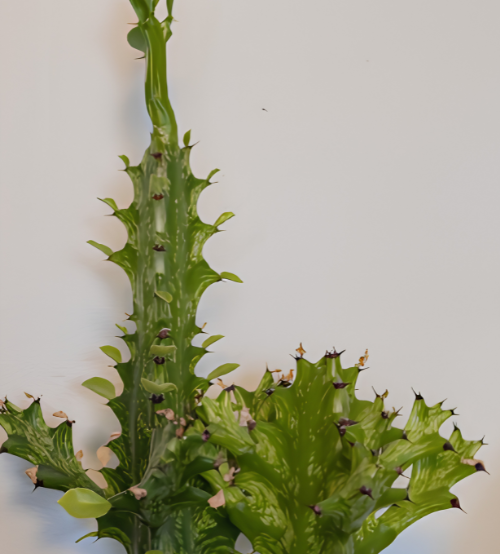
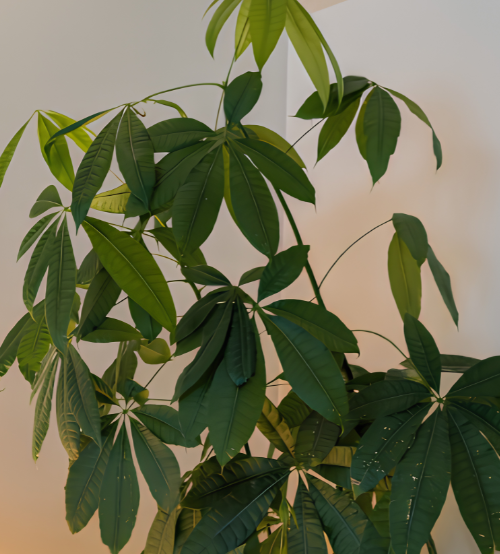
Curious, I diluted it 1:1 with water and fed my houseplants. Within a week, the results were undeniable: brighter leaves, new growth, stronger plants overall. It outperformed every fertilizer I had used before. Naturally, I wanted to know why.
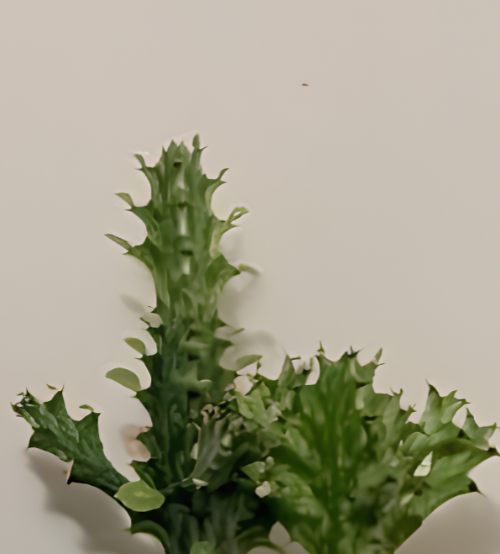
Before: March 13th 2026.
After: April 27th 2026.
Euphorbia.
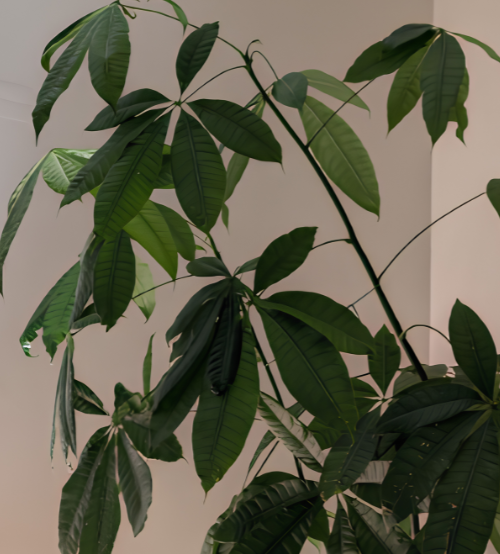
Before: March 13th 2026.
After: April 27th 2026.
Money Tree.
From Curiosity to Vermicomposting
Like many people, I started learning through trial and error (and plenty of YouTube). I set up my own worm bin using Red Wiggler worms, feeding them kitchen scraps, autumn leaves, and shredded cardboard. It is fascinating watching worms transform waste into rich, dark castings.
For over a year, I maintained my system—but eventually, I realized there’s a limit to what you can learn on your own. I wanted to see vermicomposting done at a higher level, with intention and efficiency.
That search led me to Hungry Worms (hungryworms.com), a Vermiculture production just a couple of hours from Millcreek Gardens. I had been wanting to visit for some time, and finally got the opportunity when my friends surprised me with a tour for my bachelorette party!
Learning from Hungry Worms
Hungry Worms, owned by Scott Kent in Franklin, Idaho, specializes in breeding Red Wigglers for home composters and gardeners. What stood out immediately wasn’t just the scale of the operation—it was the thoughtfulness behind every decision.
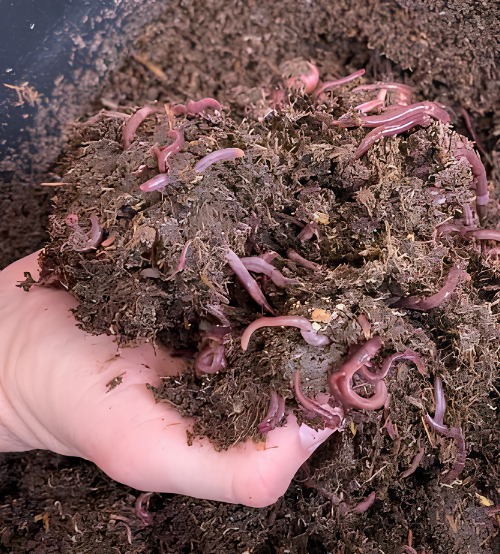
(One of Scott’s Breeder bins)
Feeding Worms for Consistency and Growth
While many home systems rely on kitchen scraps, Scott has adapted his feeding process to meet the demands of a larger worm population. Instead of inconsistent food waste, he sources manure from local farms—creating a steady, nutrient-rich food supply.
He supplements this with chicken feed, which provides essential grit. Since worms don’t have teeth, grit helps them break down food internally. It’s a simple adjustment that makes a big difference in efficiency and worm health.
Simple Innovation, Big Impact
As demand for worms increased, Scott needed more production space. Rather than expanding his footprint, he added wheels to his shelving system—allowing rows of bins to slide in and out, much like compact library shelves.
It’s a great example of practical innovation and small changes that create meaningful impact.
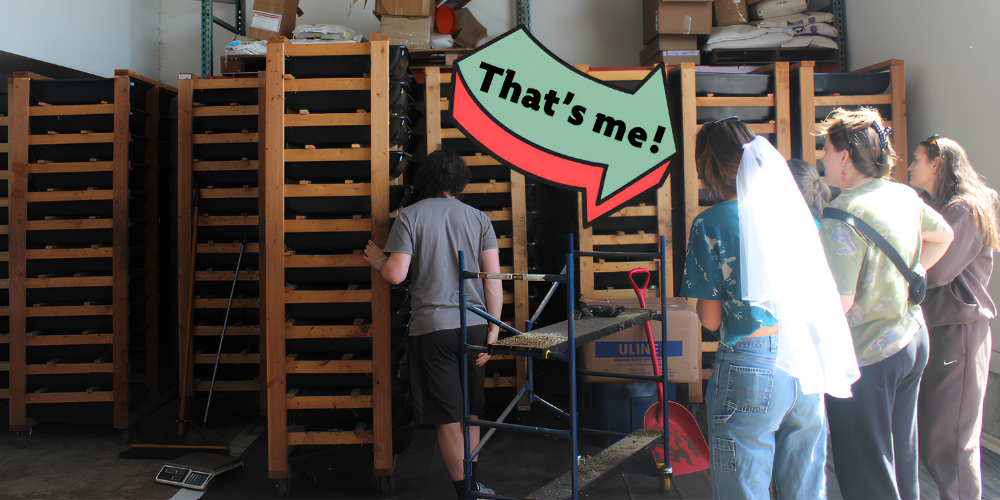
(My friends and I admiring Scott’s breeder bin organization)
Understanding the Vermicomposting Process
Vermicomposting is more than just worms eating scraps—it’s a biological system.
Worms are hermaphrodites, meaning both worms will reproduce after mating. Two worms connect at the clitellum (the band around their bodies), and both produce cocoons. Each cocoon typically yields 3-5 worms, which mature in about three to four months.
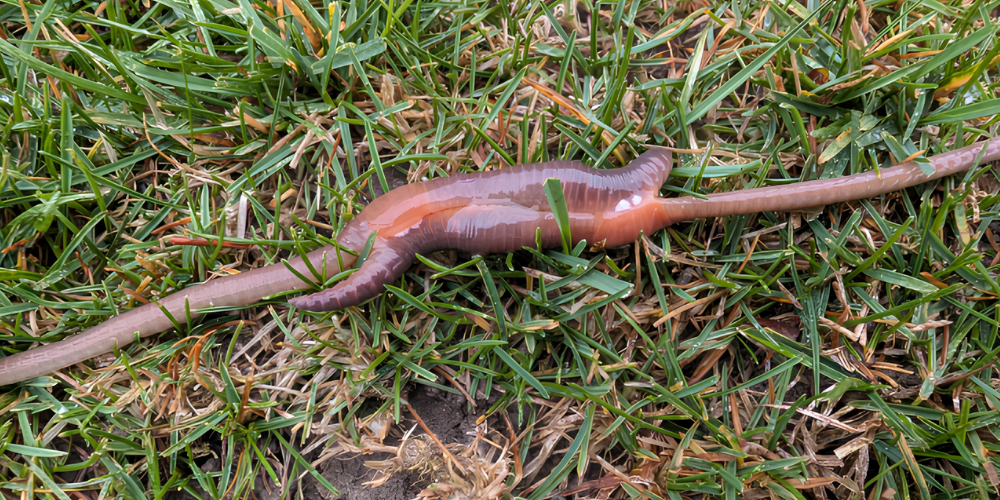
(I spotted these worms while on a morning walk in my neighborhood)
At Hungry Worms, the focus is on worm breeding. To maximize worm consistency, cocoons are separated from adult worms to ensure consistent growth cycles and efficient harvesting. This also ensures that customers receive mature worms ready to thrive in their own compost systems.
Once harvested, Scott puts the worm castings from the breeder bins into a continuous flow-through system, where finished compost is collected from the bottom while worms continue processing above. It’s an efficient method that maintains both quality and productivity.
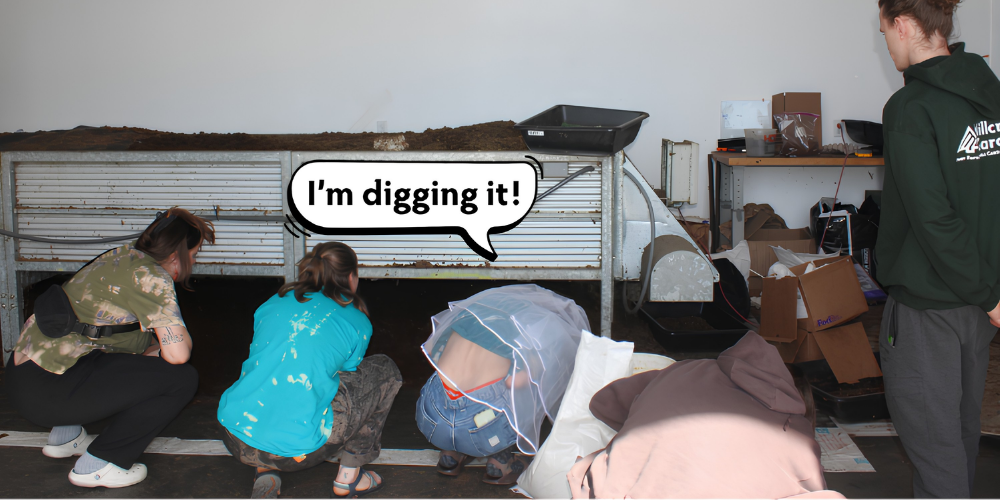
(Scott’s Continuous Flow Bin - CFT)
Why Vermicomposting Matters for Your Garden
At Millcreek Gardens, we talk a lot about soil health—and worm castings are one of the most effective ways to improve it naturally. Let’s talk about the benefits of worm castings.
They’re not just compost; they’re biologically active. Worm castings contain beneficial bacteria, fungi, protozoa, nematodes, and other microorganisms that help:
- Break down nutrients into plant-available forms
- Improve soil structure and moisture retention
- Support stronger root systems and overall plant health
During my visit with Scott, I had the chance to look at my worm castings under a microscope and see the microbial life firsthand. It’s a powerful reminder that healthy soil is alive—and that life is what drives plant success.
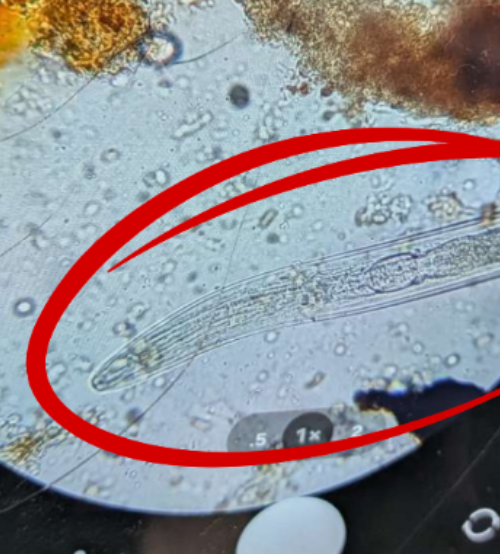
(The worm looking figure seen above is a Nematode)
Bringing Local Vermicompost to Millcreek Gardens
Experiences like this shape how we think about gardening at Millcreek Gardens. Our goal isn’t just to sell plants—it’s to help you build an ecosystem where those plants can truly thrive.
Vermicomposting is one of the most accessible ways to do that, whether you’re managing a backyard garden or a collection of houseplants. And, through our connection with Hungry Worms, we’re excited to continue learning, sharing, and supporting practices that build better soil from the ground up.
What started as a slightly confusing jar of “worm tea” turned into a deeper understanding of how soil works—and how we can work with it.
Because at the end of the day, healthier soil means healthier plants. And sometimes, the path to getting there is a little… wormy.
If I’ve piqued your interest, and you’d like to see the amazing results of Hungry Worms, stop by Millcreek Gardens and get your bag of vermicompost today!
A big thank you to Scott Kent with Hungry Worms for the knowledge and inspiration. We’re excited to keep bringing your vermicompost to the Millcreek Gardens community!